Cart
0
You may also like


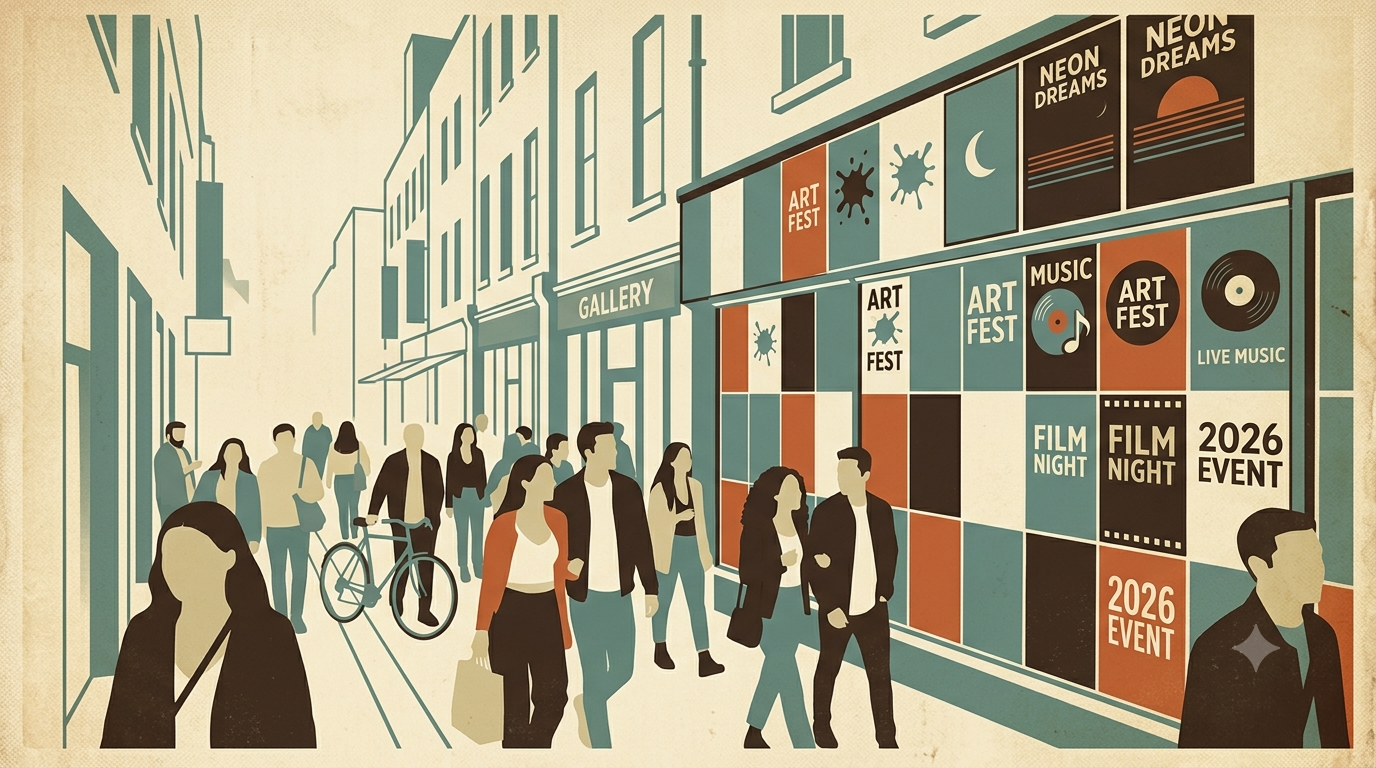
Paper Isn't Dead — It Just Found a Better Wall to Live On
Every few years, someone declares paper dead. Newspapers folded into phones. Notebooks lost ground to notes apps. Even greeting cards started feeling like a formality before a WhatsApp message did the same job faster. So it's a fair question: in a world this digital, why would anyone still want a piece of paper on their wall?
Because a poster was never really about the paper. It's about the wall.
Most of the paper that's actually disappeared was functional paper — things that existed purely to deliver information. Newspapers delivered news. Notebooks held notes. Once a screen could do the same job faster and cheaper, the paper version had no reason to survive.
A poster was never doing that job. Nobody hangs a poster to retrieve information; they hang it to say something about themselves. That's a completely different category, and it's one screens have never been able to replace. A phone wallpaper disappears the moment you lock your screen. A poster is there every single time you walk into the room, whether you're looking at it or not.
If anything, posters are having a bigger moment now than they were a decade ago, and digital culture is the reason why. Room tours on Instagram and TikTok turned wall decor into a genre of its own. Aesthetic terms like "dark academia," "minimalist," and "cottagecore" started as internet trends and ended up as actual decorating briefs. Fandoms that once lived only online — for a TV show, an anime, a discography — now want something physical to prove the obsession is real.
That's also why the posters people want today look so different from the posters of twenty years ago. Nobody's reaching for a glossy, oversized one-sheet anymore. The shift has been toward minimalist, typographic, single-line-quote designs — the kind that look like they belong in a gallery, not a teenager's bedroom circa 2004. Paper didn't get less popular. Poster design just grew up.
A few reasons posters keep earning wall space even in homes filled with smart TVs and tablets:
They're permanent in a way notifications aren't. A poster doesn't compete for your attention — it just sits there, quietly being part of the room, until one day a guest notices it and asks about it.
They're a low-cost way to commit to an aesthetic. Repainting a wall or buying furniture is expensive and irreversible-feeling. A poster (or three) lets you redesign a room's entire personality for the price of a takeout order.
They start conversations digital decor can't. Nobody asks "tell me about your phone wallpaper." But a framed Breaking Bad print, a Murakami quote, or a vintage Dragon Ball Z design over a desk? That's an instant icebreaker.
They're proof of taste, not just access. Streaming a show is something everyone with a subscription can do. Choosing to put that show on your wall says you actually cared about it.
If paper decor has changed at all, it's in how personal it's become. Posters used to be mass-produced merchandise — the same movie poster sold in every record store. Now, people want curated, minimalist reinterpretations: a single line from a film, a silhouette instead of a face, a quote instead of a poster, framed the way they'd frame real art. Combos and gallery walls have replaced the single dorm-room poster, because one print rarely tells the whole story of someone's taste — a wall of three or five usually does.
This is exactly the gap brands built around niche, design-led posters are filling: TV shows, movies, music, sports, anime, quotes — categories that map to actual fandoms and personalities rather than generic "wall art."
The ones that existed purely to carry information, mostly yes — and that was inevitable. But paper that exists to be looked at, to mean something, to make a room feel like a specific person lives there? That's not dying. It's arguably the most alive corner of the print industry right now.
Paper didn't lose to digital. It just stopped trying to compete with it and found the one job a screen was never built to do: hang still on a wall and tell people who you are.
Looking to put this into practice? Browse minimalist posters across Movies, TV Shows, Music, Anime, and more at The Posty Club.